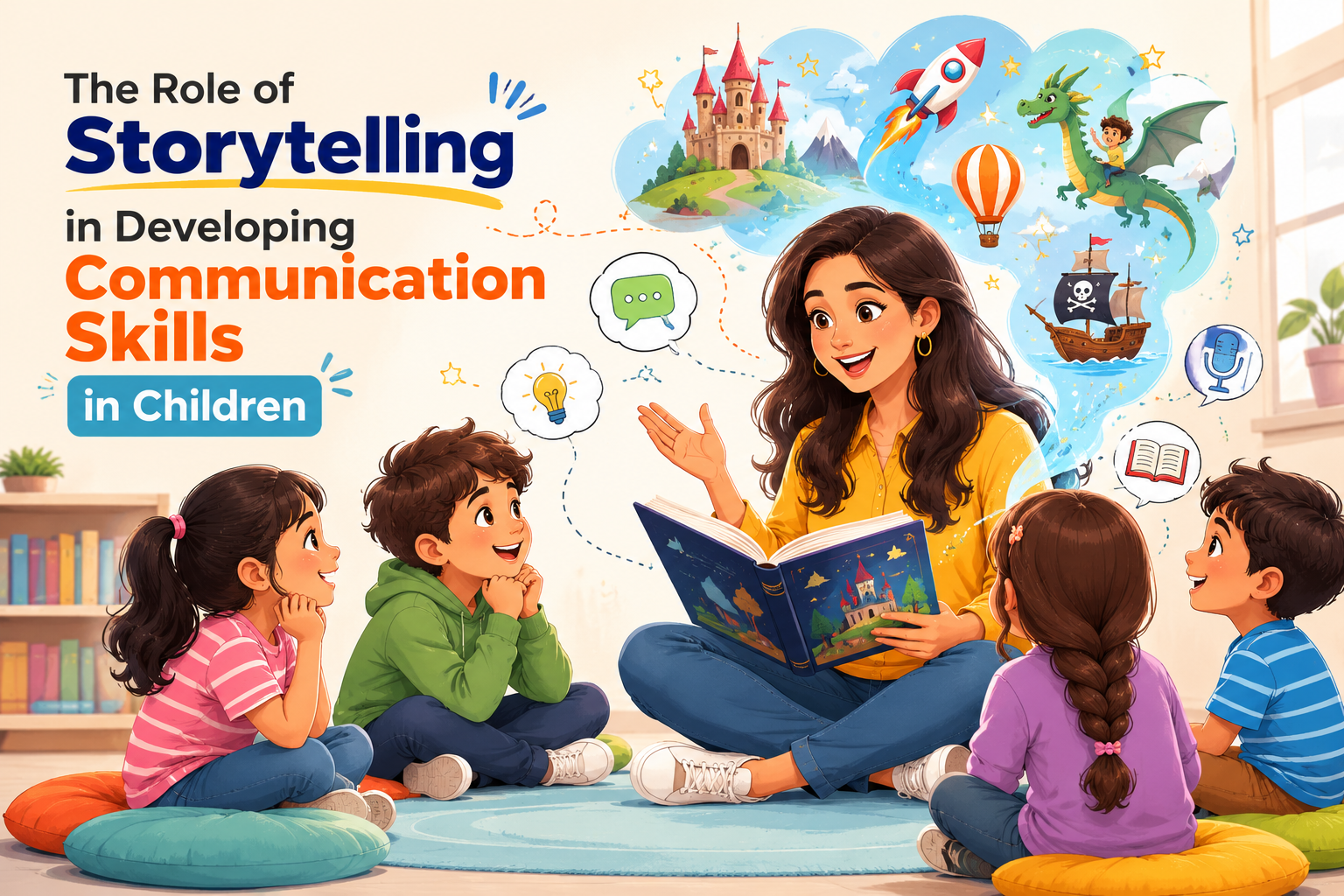
The Role of Storytelling in Developing Communication Skills in Children
Storytelling has been a part of human culture for generations. From bedtime stories at home to stories shared in classrooms, storytelling has always been a simple yet powerful way of connecting, learning, and expressing ideas.
For children, stories are much more than entertainment. They help young minds understand language, emotions, relationships, and the world around them. Most importantly, regular storytelling can play an important role in developing communication skills in children.
In today’s fast-changing world, effective communication is an essential life skill. A child who can express thoughts clearly, listen carefully, ask questions, and communicate confidently is better prepared for both academic and personal growth.
How Does Storytelling Improve Communication Skills?
Storytelling creates a natural environment where children listen, understand, imagine, and respond. These activities work together to strengthen several aspects of communication.
1. Builds Vocabulary and Language Skills
Children encounter new words and expressions when they listen to stories. They learn how words are used in different situations and gradually begin incorporating them into their own conversations.
Parents and teachers can encourage children to repeat new words, explain their meanings, or create sentences using them. This simple practice can help expand their vocabulary and improve their ability to express themselves.
2. Encourages Children to Speak Confidently
Some children may hesitate to speak in front of others. Storytelling activities can provide them with a comfortable way to practise speaking.
Asking children to retell a familiar story, describe a character, or share what they think might happen next encourages them to speak in their own words.
With regular practice, children can become more comfortable expressing their opinions and ideas.
3. Develops Listening Skills
Communication is not only about speaking. Good communication also requires effective listening.
When children listen to a story, they need to pay attention to characters, events, conversations, and important details. This helps develop concentration and active listening skills.
Teachers can ask questions after a story to check understanding and encourage children to listen carefully.
4. Improves Expression and Pronunciation
Storytelling gives children opportunities to experiment with tone, pauses, expressions, and pronunciation.
When children act out a story or narrate it themselves, they learn how different emotions can be expressed through their voice and body language.
This can gradually improve their overall speaking style and make their communication more expressive.
5. Encourages Imagination and Creativity
Stories take children into different worlds, introduce them to new situations, and allow them to imagine possibilities.
When children are encouraged to create their own stories, they learn how to organise their thoughts and connect different ideas.
For example, a teacher may provide a simple picture and ask students to create a story around it. Such activities encourage creative thinking while also improving communication.
6. Helps Children Understand Emotions
Stories often introduce characters experiencing happiness, sadness, fear, excitement, disappointment, or courage.
Through these characters, children can learn to identify and understand different emotions. They can also discuss how a character may be feeling and why.
This develops emotional awareness and helps children communicate their own feelings more effectively.
7. Develops Conversation Skills
Storytelling can naturally lead to discussions.
After listening to a story, children can be encouraged to answer questions such as:
* What did you like about the story?
* Which character did you like most?
* What would you have done differently?
* What do you think happened next?
Such conversations teach children how to express opinions, respond to questions, and participate in discussions.
8. Strengthens Public Speaking Skills
Story narration, role-play, storytelling competitions, and classroom presentations give children opportunities to speak before others.
These activities can help reduce hesitation and gradually build confidence.
The more children practise speaking in a supportive environment, the more comfortable they can become with expressing themselves before a group.
Storytelling at Home and School
Storytelling does not require complicated resources. Parents can make storytelling a part of a child’s daily routine by reading bedtime stories, discussing characters, or asking children to narrate their favourite stories.
Schools can also integrate storytelling into classroom activities through:
* Story narration
* Role-play
* Puppet shows
* Group storytelling
* Picture-based storytelling
* Story-writing activities
* Classroom presentations
These activities can make learning interactive while giving children regular opportunities to communicate.
How Parents Can Encourage Storytelling
Parents can support communication development through a few simple habits:
Read together: Choose age-appropriate books and read with your child regularly.
Ask open-ended questions: Instead of questions that require only a “yes” or “no,” ask children to explain their thoughts.
Let children retell stories: Encourage them to narrate the story in their own words.
Create stories together: Start a story and allow your child to continue it.
Avoid interrupting too often:Give children time to complete their thoughts and express themselves.
Appreciate their efforts: Positive encouragement can make children more confident speakers.
Storytelling and Holistic Child Development
Communication skills are closely connected with other areas of development. As children become better at expressing themselves, they may also develop stronger confidence, creativity, listening skills, emotional awareness, and social interaction.
This is why storytelling can be a valuable part of **holistic education**. It transforms language learning into an engaging experience where children learn by listening, imagining, discussing, and expressing.
Conclusion
Storytelling is a simple activity with powerful learning benefits. It can help children expand their vocabulary, become confident speakers, listen actively, express emotions, organise their thoughts, and interact more effectively with others.
Whether it happens at home or in the classroom, storytelling gives children a safe and enjoyable opportunity to find their voice.
By encouraging children to listen to stories, tell their own stories, and talk about what they hear, parents and educators can help build communication skills that will support them throughout their academic journey and beyond.
At SRS Global School, creating opportunities for students to learn, express, explore, and grow is an important part of developing well-rounded learners.
Frequently Asked Questions
Why is storytelling important for children?
Storytelling helps children develop vocabulary, listening, speaking, imagination, confidence, emotional awareness, and communication skills.
How does storytelling improve a child's vocabulary?
Stories introduce children to new words and phrases in meaningful contexts. Regular exposure helps children understand and use new vocabulary naturally.
Can storytelling improve public speaking skills?
Yes. Story narration, role-play, and classroom presentations give children regular opportunities to practise speaking before others, which can help improve confidence and expression.
How can parents use storytelling at home?
Parents can read stories with children, ask questions, encourage them to retell stories, and create new stories together.
At what age should children start storytelling activities?
Storytelling can begin from an early age. Even young children can listen to simple stories, identify characters, describe pictures, and gradually begin narrating their own stories.
storytelling for children, communication skills in children, storytelling and child development, importance of storytelling, language development in children, speaking skills for students, listening skills for children, public speaking for children, vocabulary development, holistic education, child communication skills, SRS Global School Meerut
#StorytellingForChildren #CommunicationSkills #ChildDevelopment #LanguageDevelopment #KidsLearning #PublicSpeaking #ListeningSkills #HolisticEducation #StudentDevelopment #CreativeLearning #SRSGlobalSchool #MeerutSchools