Education is not limited to textbooks, classrooms, and examinations. A child’s overall development also depends on physical health, emotional wellbeing, social interaction, discipline, and the ability to work with others. This is why sports and physical activity play an important role in a student’s educational journey.
For many years, academics and sports were sometimes viewed as separate priorities. Today, however, schools and parents increasingly recognise that regular physical activity can complement classroom learning and contribute to the development of well-rounded, confident, and resilient students.
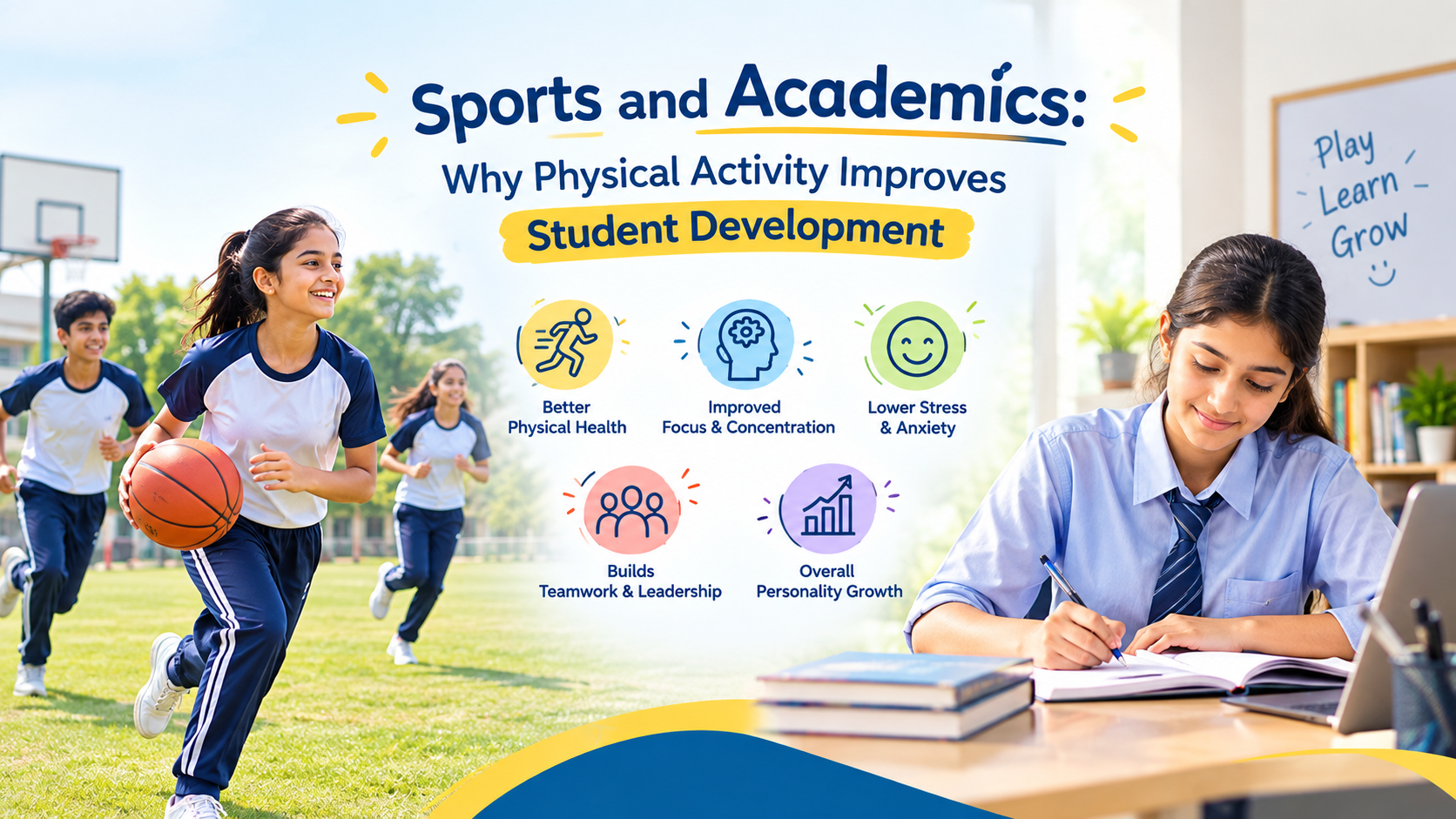
From improving concentration to developing teamwork and leadership skills, sports can teach lessons that extend far beyond the playing field.
How Physical Activity Supports Academic Development
A healthy body can support a healthy approach to learning. Regular physical activity encourages students to stay active, manage their energy, and develop routines that can positively influence their school life.
Here are some important ways sports and academics can work together.
1. Sports Can Improve Concentration and Focus
Students spend considerable time listening, reading, writing, solving problems, and participating in classroom activities. Physical activity provides an opportunity to move, refresh, and recharge.
Regular exercise can help students feel more alert and engaged. After participating in physical activities, children may find it easier to return to academic tasks with renewed attention.
A balanced school routine that includes both learning and physical activity can therefore create opportunities for students to stay engaged throughout the day.
2. Physical Activity Helps Develop Discipline
Success in both sports and academics often requires consistency.
Whether a student is preparing for an examination or practising a sporting skill, progress usually comes from regular effort rather than instant results. Training teaches children to follow routines, practise skills, learn from mistakes, and continue working towards their goals.
These habits can also be applied to academic life.
A student who learns the value of preparation and consistency on the sports field can carry those habits into studying, assignments, projects, and examinations.
3. Sports Teach Teamwork and Cooperation
Classrooms and workplaces require people to communicate and collaborate with others. Sports provide children with practical opportunities to develop these abilities.
Team games encourage students to:
Communicate with teammates
Understand different perspectives
Share responsibilities
Support others
Follow rules
Work towards a common goal
These social skills are valuable not only during school years but also in higher education and future professional environments.
4. Sports Build Confidence
Learning a new skill takes time. A child may not score the first goal, win the first race, or master a new technique immediately. With practice and encouragement, however, improvement becomes visible.
This process can strengthen self-confidence.
Sports also give students opportunities to set achievable goals, experience progress, handle competition, and recognise their own strengths. These experiences can encourage a positive attitude towards challenges in other areas of life.
Learning to Handle Success and Failure
One of the most valuable lessons sports can offer is that success and setbacks are both part of the learning process.
A match may not go as planned. A personal record may not be achieved. A team may lose despite putting in significant effort.
Such experiences can teach students how to respond constructively to disappointment.
Instead of viewing failure as the end of the journey, children can learn to analyse what happened, identify areas for improvement, and try again. This resilience can be useful when students face challenging subjects, difficult examinations, or other obstacles in their academic lives.
Sports Encourage Leadership Skills
Leadership is not developed only through formal positions such as class representative or team captain. Everyday experiences can help children develop leadership qualities.
Sports can encourage students to take responsibility, communicate clearly, make decisions, motivate teammates, and remain accountable for their actions.
Different students may demonstrate leadership in different ways. Some may naturally guide a team, while others may contribute by supporting teammates or helping the group remain focused.
These experiences help children understand that effective leadership involves responsibility, cooperation, and respect.
Physical Activity and Emotional Wellbeing
School life can involve academic expectations, examinations, assignments, competitions, and social experiences. Regular physical activity can provide children with a healthy opportunity to move away from prolonged periods of sitting and academic work.
Outdoor games, athletics, yoga, swimming, and other physical activities can become meaningful parts of a balanced routine.
Sports can also provide opportunities for children to socialise, enjoy themselves, and develop friendships. Creating a healthy balance between academics, recreation, and physical activity can contribute to a positive school experience.
Sports and Time Management
Balancing studies and sports requires planning.
Students who participate in regular training need to manage their time between classes, homework, practice, rest, and other responsibilities. With appropriate guidance, this can help them understand the importance of prioritising tasks and organising their schedules.
Time management is an important life skill. Learning it early can help students approach both academic and extracurricular responsibilities more systematically.
The Role of Schools in Creating a Balanced Learning Environment
Schools have an important role in ensuring that physical education is treated as an integral part of student development rather than simply an occasional recreational activity.
A balanced school environment can provide students with opportunities to participate in:
Team sports
Individual sports
Athletics
Fitness activities
Indoor and outdoor games
Yoga and other wellness activities
The objective is not necessarily to make every child a competitive athlete. Rather, it is to help students discover the value of movement, teamwork, discipline, perseverance, and healthy competition.
Encouraging Every Child to Participate
Not every student will enjoy the same sport, and not every child will have the same physical abilities. Creating an inclusive sporting environment is therefore important.
Parents and educators can encourage children to explore different activities and identify forms of physical activity they genuinely enjoy.
The focus should be on participation, enjoyment, healthy habits, and personal growth, rather than comparing one child’s sporting performance with another’s.
When children associate physical activity with enjoyment and achievement, they are more likely to develop positive habits that can continue beyond their school years.
A Balanced Approach to Student Development
Academic achievement is an important part of education, but it is only one aspect of a child’s development. Students also need opportunities to build confidence, communication skills, resilience, discipline, creativity, and physical wellbeing.
Sports can contribute to many of these areas while complementing classroom learning.
The goal of modern education is not simply to prepare students for examinations. It is to help them develop the knowledge, skills, values, and confidence needed to navigate a changing world.
Conclusion
Sports and academics do not have to compete for a student’s time—they can complement each other.
Regular physical activity can support concentration, discipline, teamwork, confidence, resilience, leadership, and time management. When combined with meaningful classroom learning, sports can contribute to the development of students who are not only academically prepared but also socially, emotionally, and physically equipped for the future.
At SRS Global School, a holistic approach to education can give students opportunities to learn both inside and outside the classroom. By encouraging academics alongside sports and other extracurricular activities, schools can help children discover their abilities, develop healthy habits, and grow into confident individuals.
Because true education is about developing the whole child—mind, body, and character.