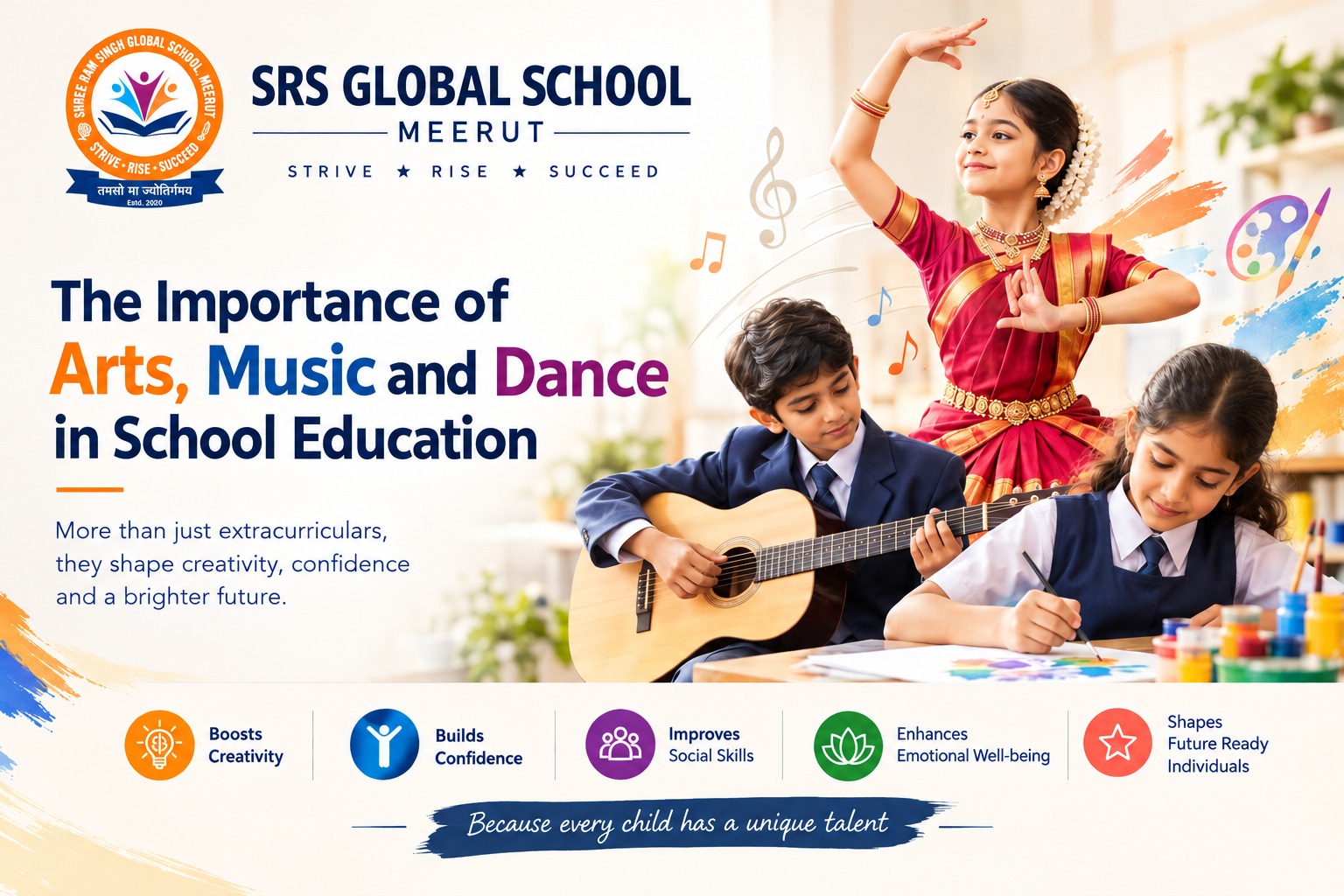
Education is not limited to textbooks, examinations, and academic performance. A child’s overall development also depends on creativity, self-expression, confidence, communication, and social skills. This is why arts, music, and dance in school education can play an important role in creating a well-rounded learning experience.
When children participate in creative activities, they get opportunities to explore their imagination, express themselves, work with others, and discover their individual interests. These experiences can complement academic learning and contribute to their personal and social development.
1. Encourages Creativity and Imagination
Arts, music, and dance give children opportunities to explore their imagination. Whether they are creating artwork, learning a musical instrument, singing, or practising a dance performance, students learn to think creatively.
Creative experiences can also encourage children to approach challenges with curiosity and explore different ways of finding solutions.
2. Builds Confidence and Self-Expression
Creative activities provide children with different ways to express their thoughts and emotions. A student who may be hesitant to speak in front of others may gradually become more confident through performances, presentations, art exhibitions, or group activities.
Participating in school performances can help children become comfortable expressing themselves in front of an audience.
3. Supports Emotional Development
Music and art can provide children with positive ways to express their feelings and emotions. Creative activities can help students explore their thoughts, develop self-awareness, and enjoy a constructive break from routine academic activities.
A school environment that encourages creative expression can therefore contribute to a child's emotional and personal growth.
4. Develops Discipline and Concentration
Learning a musical instrument, practising dance movements, or working on an artwork requires patience and regular practice.
Children learn that developing a skill takes time and consistent effort. This can help them develop important qualities such as discipline, concentration, patience, and perseverance—skills that can also support their academic journey.
5. Promotes Teamwork and Collaboration
Music and dance performances often involve students working together. They need to listen to one another, coordinate their actions, respect different roles, and work towards a common objective.
These activities provide practical opportunities for children to understand teamwork, cooperation, responsibility, and mutual respect.
6. Improves Communication Skills
Communication is an essential life skill, and creative activities can support its development.
Through music, dance, theatre, and visual arts, children learn different ways to communicate ideas and emotions. Performing before an audience can also help students develop confidence in public expression.
7. Connects Students with Culture and Traditions
Arts, music, and dance are closely connected with culture and heritage. Introducing children to different forms of Indian and global art can help them appreciate cultural diversity.
School celebrations, cultural programmes, and creative projects can make learning about traditions more engaging and memorable.
8. Supports Holistic Education
A child's education should involve more than academic subjects. Holistic education provides opportunities for students to develop academically, socially, emotionally, physically, and creatively.
Arts, music, and dance can complement subjects such as science, mathematics, languages, and social studies by giving students different ways to learn and express what they understand.
9. Helps Children Discover Their Interests
Every child has unique interests and abilities. Some children may enjoy painting, while others may prefer singing, dancing, theatre, or playing an instrument.
Providing exposure to different creative activities allows students to explore their interests and discover areas where they feel motivated and engaged.
10. Makes School Learning More Engaging
Creative activities can make the school experience more interactive and enjoyable. Projects, performances, exhibitions, music sessions, and cultural activities can provide students with opportunities to learn through participation and experience.
When children enjoy the learning process, they may become more actively involved in their school life.
The Role of Schools in Encouraging Creativity
Schools have an important role to play in providing children with opportunities to explore creativity alongside academics. A supportive environment can encourage students to participate without the pressure of being perfect.
The focus should be on exploration, learning, practice, participation, and enjoyment. This allows children to develop their skills at their own pace while gaining valuable experiences.
Creating a Well-Rounded Educational Experience
The purpose of education is not simply to prepare children for examinations. It is also about helping them become confident, curious, creative, responsible, and well-rounded individuals.
By giving students opportunities to participate in arts, music, and dance, schools can create a learning environment where children can explore their creativity, express themselves, collaborate with others, and develop valuable life skills.
Conclusion
The importance of arts, music, and dance in school education goes beyond entertainment. These activities can support creativity, confidence, communication, discipline, teamwork, emotional expression, and cultural awareness.
For parents choosing a school, it is important to look at the overall learning environment and the opportunities available beyond academics. A balanced educational experience can give children the space to learn, create, perform, collaborate, and grow with confidence.
At SRS Global School, the focus on a well-rounded learning experience aims to provide students with opportunities to develop their academic abilities while exploring their creative and individual potential.
Give your child an environment where learning goes beyond the classroom and every talent gets an opportunity to grow.